Blood Test for ME/CFS Shows Potential, But More Research Needed

Image created using Adobe Firefly

A recent study published in the Journal of Translational Medicine has identified epigenetic changes in immune cells that could potentially lead to a blood test for ME/CFS, achieving 96% accuracy in diagnosing severe cases among 47 patients. As reported in Nature, the research community is responding with measured interest while noting important limitations. Our center investigator Katie Glass from Cornell University exemplifies this cautious optimism, acknowledging that while “it’s really cool they brought this method to the field,” her “enthusiasm would be pretty tempered because the cohort is very small and they looked at only very severe patients.” Glass points out that while many studies have identified apparent ME/CFS signatures, “no one has yet taken the next step to develop a clinical biomarker panel.” Nevertheless, she remains hopeful about the field’s progress, noting that while ME/CFS research was once “50 years behind many other diseases,” it’s “really positive that now, more and more researchers are joining the field, and that everything under the sun that you can think of is finally being studied.” This balanced perspective reflects the scientific rigor needed as researchers work toward reliable diagnostic tools for this complex condition.


Center Investigator Anne Gardella Featured in Discover Magazine for ME/CFS Biomarker Research

Anne Gardella

We’re excited to share that a graduate student within the Center, Anne Gardella, has been featured in Discover Magazine for her recent publication in the Proceedings of the National Academy of Sciences on cell-free RNA biomarkers for ME/CFS. Gardella’s work developed machine-learning models to identify molecular fingerprints in blood samples that achieved 77% accuracy in detecting ME/CFS, representing what she calls “a promising start to a non-invasive test” for this complex condition affecting over 3 million Americans. While acknowledging that clinical diagnostic tools typically require above 90% accuracy, Gardella remains optimistic about the potential for this approach to contribute to both reliable diagnosis and deeper understanding of ME/CFS, stating, “we hope this work not only contributes to a reliable diagnostic tool and a deeper understanding of ME/CFS but also continues to bring understanding of the biological problems that result in the lived experiences of these patients.”

Op-ed aims to promote funding for ME/CFS

Maureen Hanson, Center Director, and journalist Hillary Johnson co-authored an op-ed in The Hill. The op-ed highlights the need to fund research into chronic post-infectious diseases. It is unfortunate that other similar, yet distinct, diseases such as ME/CFS are not included in long COVID funding proposed by Senator Sanders.. Please take a moment to read and share this op-ed to help promote funding for pre-pandemic ME/CFS–a disease that profoundly impacts so many people. 

Maureen Hanson authors editorial on enteroviruses and ME/CFS

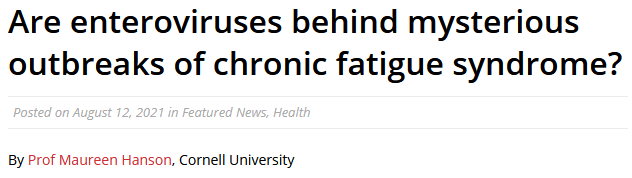
Published on August 12, 2021, Maureen Hanson wrote an editorial in Frontiers Science News that highlights the enterovirus theory of ME/CFS. Particularly, Hanson emphasizes that, “ME/CFS is neither a rare nor a trivial illness.” She provides insight into the potential link between ME/CFS and a chronic EV infection. This probable link was reviewed in detail in a Frontiers in Medicine June 2021 article by Adam O’Neal and Hanson. Hanson discusses the possibility that SARS viruses may be the second class of RNA viruses to cause a chronic illness, given the existence of “long COVID.”

Graphical representation of enteroviruses causing brain inflammation. Photo credit: Kateryna Kon (Shutterstock)

ENID Center featured in Norwegian blog

Quote translation: “… how ME became the most contentious disease of our time”
Photo: De Bortgjemte (The Hidden)

A Norwegian blog, The Hidden, published a summary of our NIH funded research center efforts.  The blog is by physical therapist and journalist Jørgen Jelstad. He covers various aspects relating to ME/CFS and has also reviewed the other two NIH funded research centers—Columbia’s Center for Solutions for ME/CFS and The Jackson Laboratory’s Collaborative Research Center. For an English translation of the website by Google Translate iTool, please visit this link.

SMCI Chronicle highlights Dr. Hanson and Center

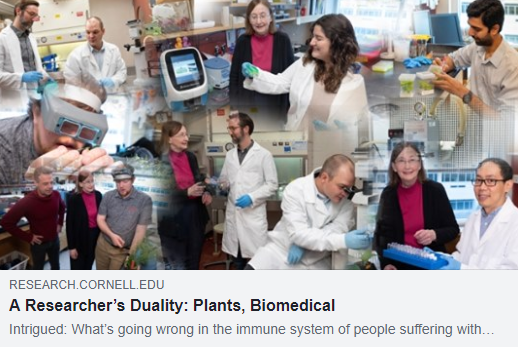
The Solve ME/CFS Initiative’s (SMCI) Spring 2018 Solve ME/CFS Chronicle contains an article highlighting Dr. Marueen Hanson and the NIH-funded Cornell ME/CFS Collaborative Research Center. The article includes an interview with Dr. Hanson providing her perspective on ME/CFS research and more. Please see the links below to retrieve this information.

Article “Dr. Maureen Hanson: From Plant Biology to ME/CFS Champion”

Complete Solve ME/CFS Chronicle Spring 2018

Additionally, SMCI hosts an archive of all of their publications here. It is a great way to review SMCI’s publications in one location.

Gut microbiome publication

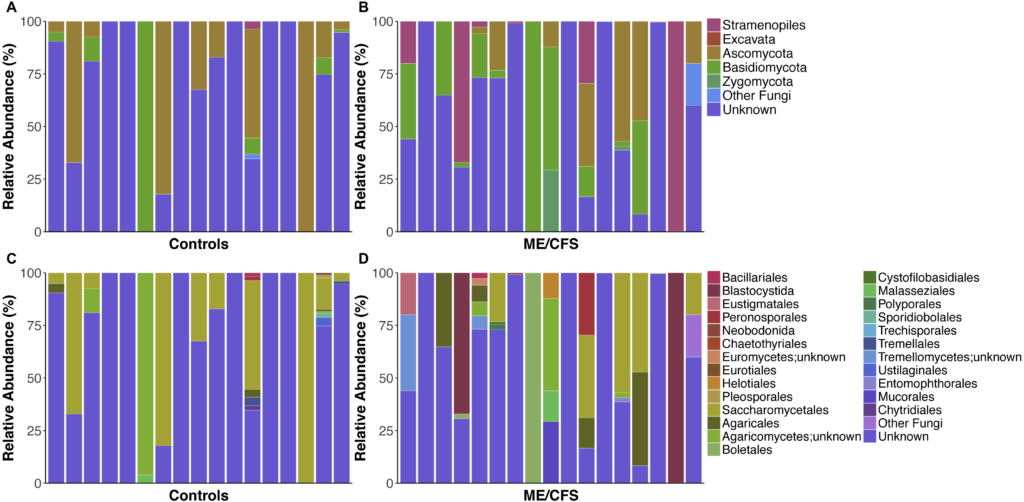
On January 22, 2018, PeerJ published “Eukaryotes in the gut microbiota in myalgic encephalomyelitis/chronic fatigue syndrome”. The publication is work done by Center participants regarding the diversity of eukaryotes in the gut microbiomes of people with ME/CFS and in healthy controls.

A recent research highlight by the Solve ME/CFS Initiative provides a detailed summary of this article. SMCI’s research summary can be viewed here.


Figure 1: Individual relative taxa abundances in healthy controls and ME/CFS patients. (from publication)

Mandarano AH, Giloteaux L, Keller BA, Levine SM, Hanson MR. 2018. Eukaryotes in the gut microbiota in myalgic encephalomyelitis/chronic fatigue syndrome. PeerJ 6:e4282 https://doi.org/10.7717/peerj.4282

The Real Story About Chronic Fatigue Syndrome

A devastating illness that needs a better name
Garnet News October 19, 2016

Chronic Fatigue Syndrome is an illness that many may have heard of, but few, in reality, know much about.

The misconception of the seriousness of the disease is in part caused by the use of the name Chronic Fatigue Syndrome (CFS), coined in 1988 by a committee convened at the Centers for Disease Control. Prior to that recommendation, the disease was known by the more intimidating name Myalgic Encephalomyelitis (ME), which is favored by many patients and still used in many countries overseas. Chronic Fatigue Syndrome trivializes the nature of the disease and its impact on the lives of the people who suffer with it.

Read the Full Article

Posts navigation

1 2
Scroll to top