A commentary by Andrew Grimson about the single-cell RNA-seq preprint from his lab

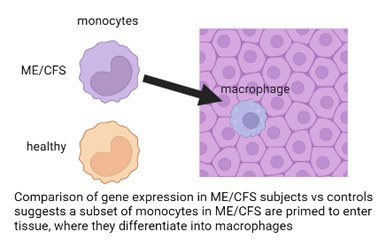
When we started this project, our goal was to ask which components of the immune system are most altered in ME/CFS (and which are not). If we could answer this question, we hoped that it would give us a clear path towards understanding some of the molecular underpinnings of ME/CFS, which is likely to be an essential step towards therapies. We used a technique called single-cell RNA sequencing to answer this question, an approach that looks at the genes expressed in thousands of individual cells from each ME/CFS individual (and control). When we look at the data (which in aggregate contains about 0.5 million immune cells found in peripheral blood, sampled from 30 ME/CFS individuals and 28 controls), the strongest signal of dysregulation is found in classical monocytes, a type of innate immune cell with diverse roles. There are three fundamental observations we can make about monocytes in ME/CFS. First, within individuals with ME/CFS, the proportion of monocytes that are dysregulated is variable, with a mixture of relatively normal cells and those that are altered. Second, comparing between individuals, the proportion of altered monocytes is also variable, with individuals with a higher fraction of altered monocytes tending to have more serious cases of ME/CFS. Third, by looking at the genes mis-expressed in altered monocytes, we can find patterns that suggest what might be different about the biology of the altered monocytes. In essence, what we see is that monocytes in individuals with ME/CFS appear to be triggered to migrate to tissues, where they become macrophages. This migration and differentiation pathway is a normal function of monocytes – we think the pathway is more active in ME/CFS, and this increased activity could contribute to many of the symptoms of ME/CFS. This work sets up lots of questions that motivate our work now – where are the monocytes going in ME/CFS individuals, what is causing them to be dysregulated, and ultimately, can we reverse this dysregulation?
Continue reading
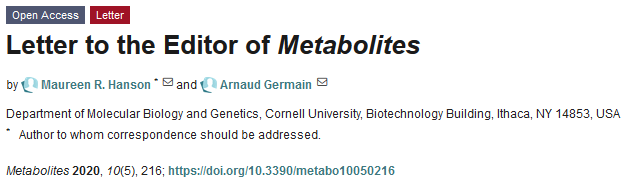
Letter to the Editor of Metabolites explaining the estimate of 65 million people with ME/CFS worldwide

Back in January 2020, Germain et al published a metabolomics paper in Metabolites stating:

The latest worldwide prevalence rate projects that over 65 million patients suffer from myalgic encephalomyelitis/chronic fatigue syndrome (ME/CFS)…

This 65 million people with ME/CFS figure has brought about some attention resulting in this letter to the Editor. Importantly, this letter brings several more supporting references beyond the initial Valdez et al publication. The key takeaway from the letter is that the prevalence of ME/CFS is likely much greater than the oft-cited figure of “20 million worldwide.”

Plasma proteomics publication shows disrupted cell-to-cell signaling

We are proud to announce our latest plasma proteomics publication is available as open access in Proteomes.

This manuscript takes a look at 4,790 circulating plasma proteins from 20 ME/CFS women compared to 20 healthy women, over an unprecedented range, for ME/CFS, of 9 orders of magnitude.

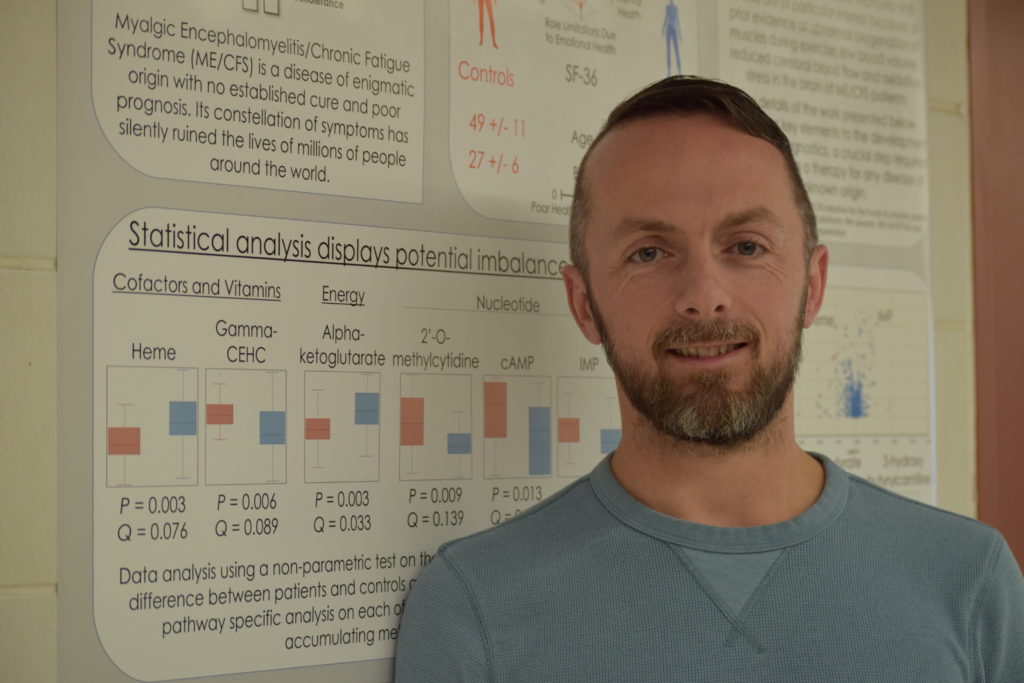
Arnaud Germain, PhD

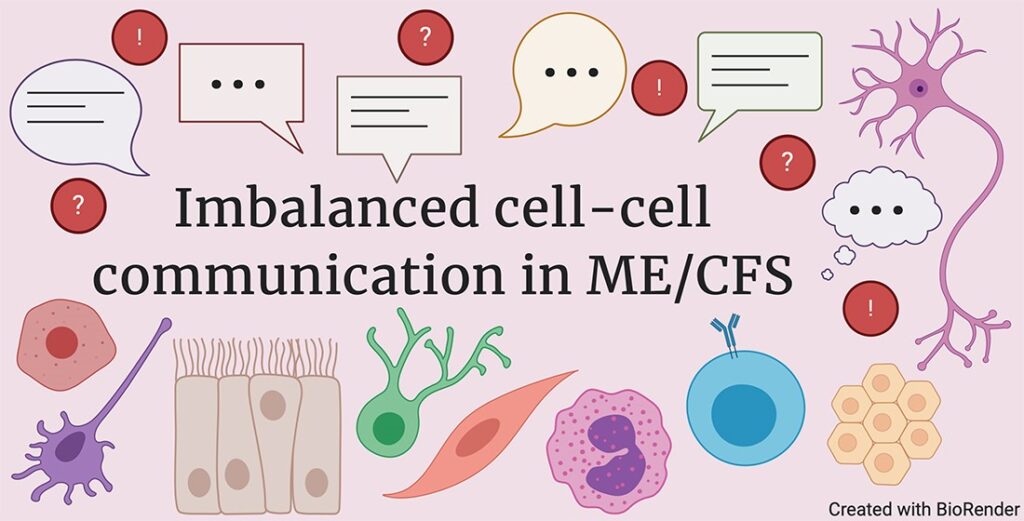
Pathway analysis uncovered disrupted cell-to-cell communication, specifically in the ephrin-Eph signaling pathway. This pathway is crucial for many aspects of our body’s homeostasis, including development, physiology, and disease regulation.

Additionally, the paper outlines promising results for the development of a diagnostic test using protein ratios.

First author, Arnaud Germain, PhD, outlines these findings in a video abstract below.

Transcripts for the video are available:
– English
– German

Chinese, French, and Spanish subtitles for the video abstract are available. See video settings to select an option.

RTI launches two tools to advance ME/CFS research

Our MECFSnet collaborator, RTI, which operates the Data Management and Coordinating Center (DMCC) for the NIH ME/CFS Centers, has officially launched two research tools – mapMECFS and searchMECFS.

With mapMECFS, the Cornell ME/CFS Collaborative Research Center has worked promptly to submit data to the network. A total of 8 datasets are available. Below lists the publications from which the datasets have been uploaded.

Read more to see the full announcement from RTI.

Continue reading

CDC SEC call on Immune Dysfunction in ME/CFS

On September 23, 2020, a CDC ME/CFS Stakeholder Engagement and Communication (SEC) call took place, featuring a presentation by Dr. Maureen Hanson, ENID Center Director, on “Immune Dysfunction in ME/CFS”. Dr. Elizabeth Unger, Branch Chief of CDC’s Chronic Viral Diseases Branch, provided CDC programmatic updates. The SEC call transcript, audio, and presentation slides are now available on the CDC’s website. Direct links to specific content, including Hanson’s slideshow presentation, are below.

Listen to the audio recording.

Read the transcript.

View Dr. Hanson’s presentation.

Maureen Hanson presents at Cornell COVID-19 Summit 2020

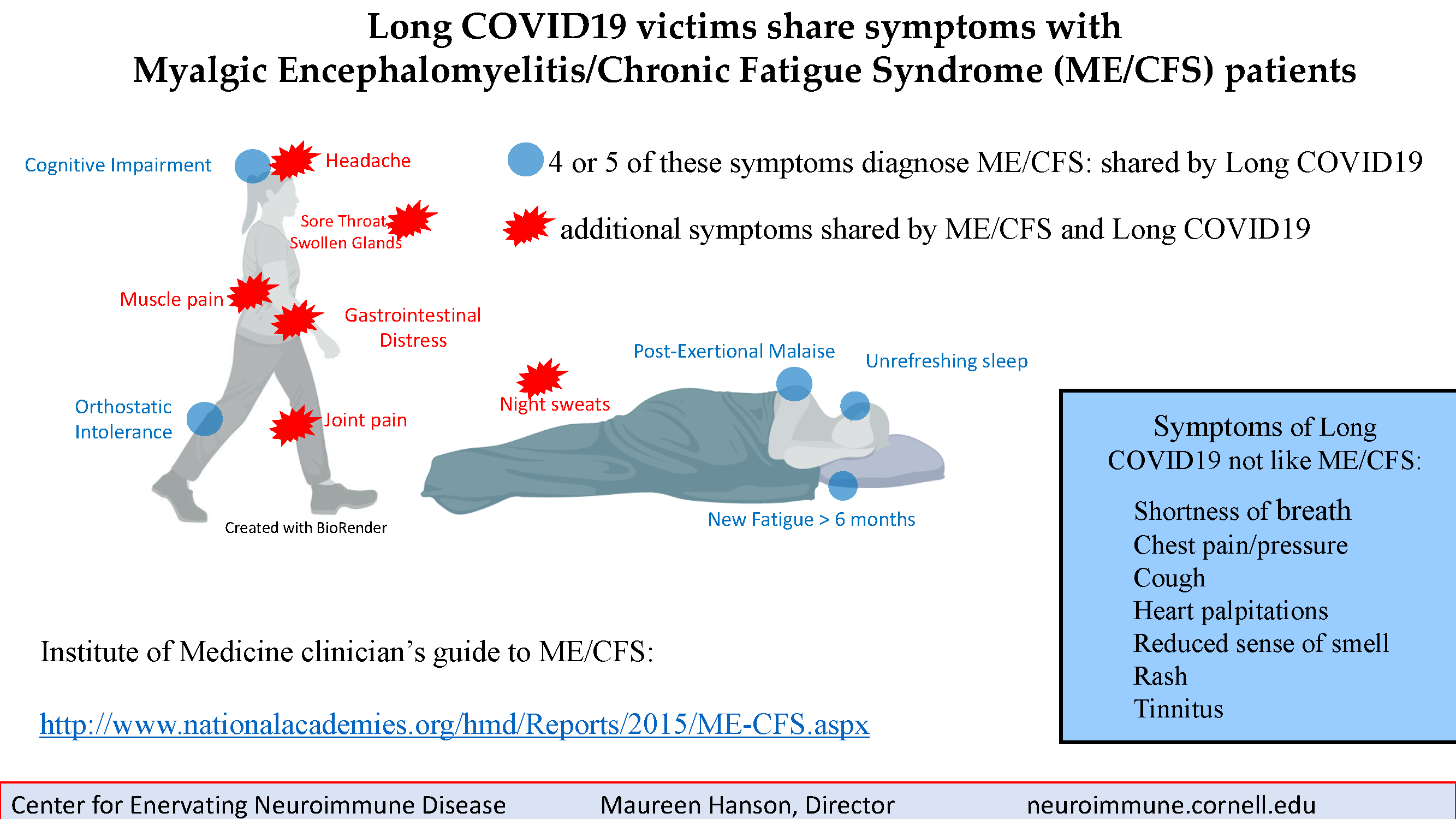
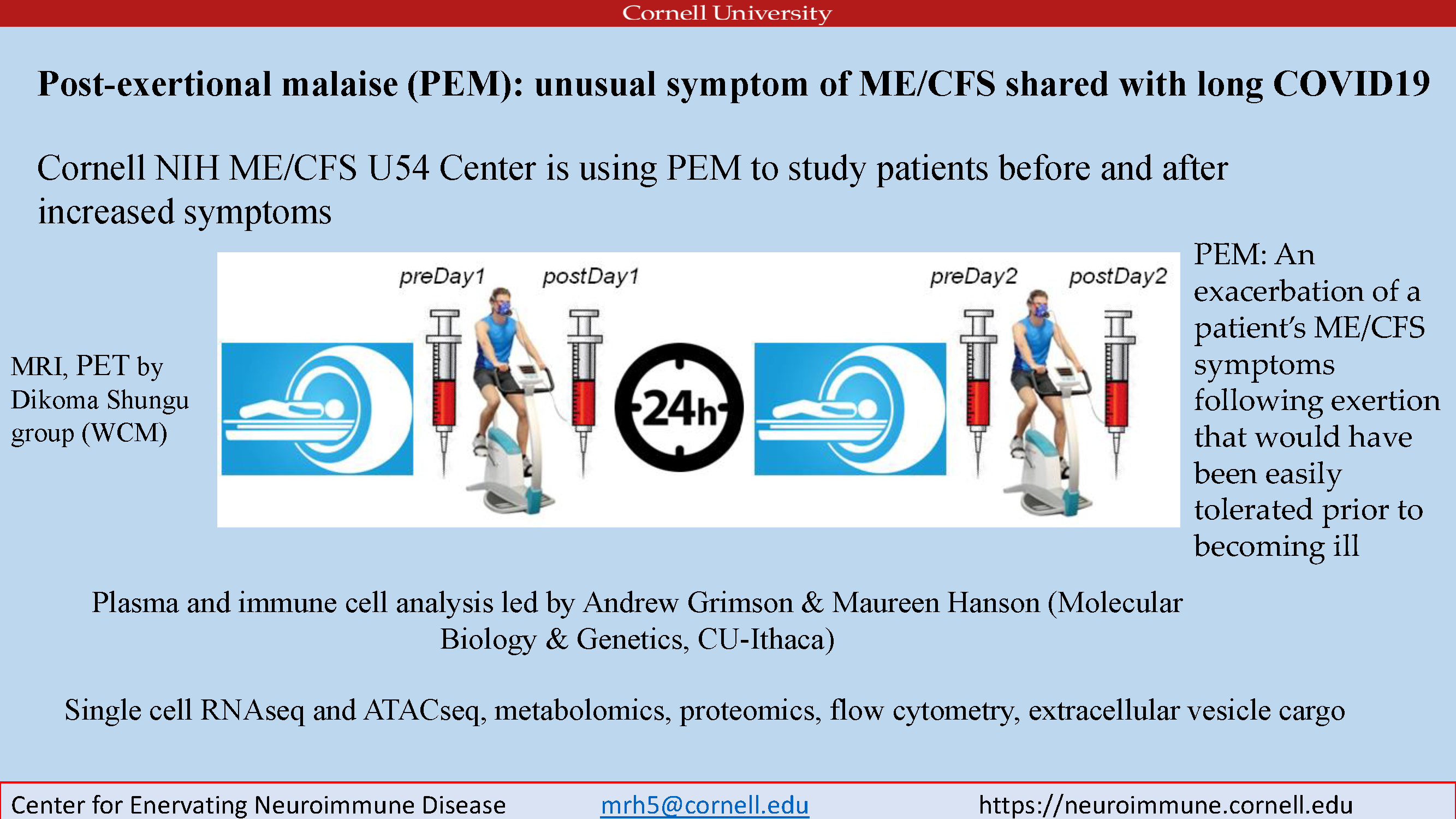
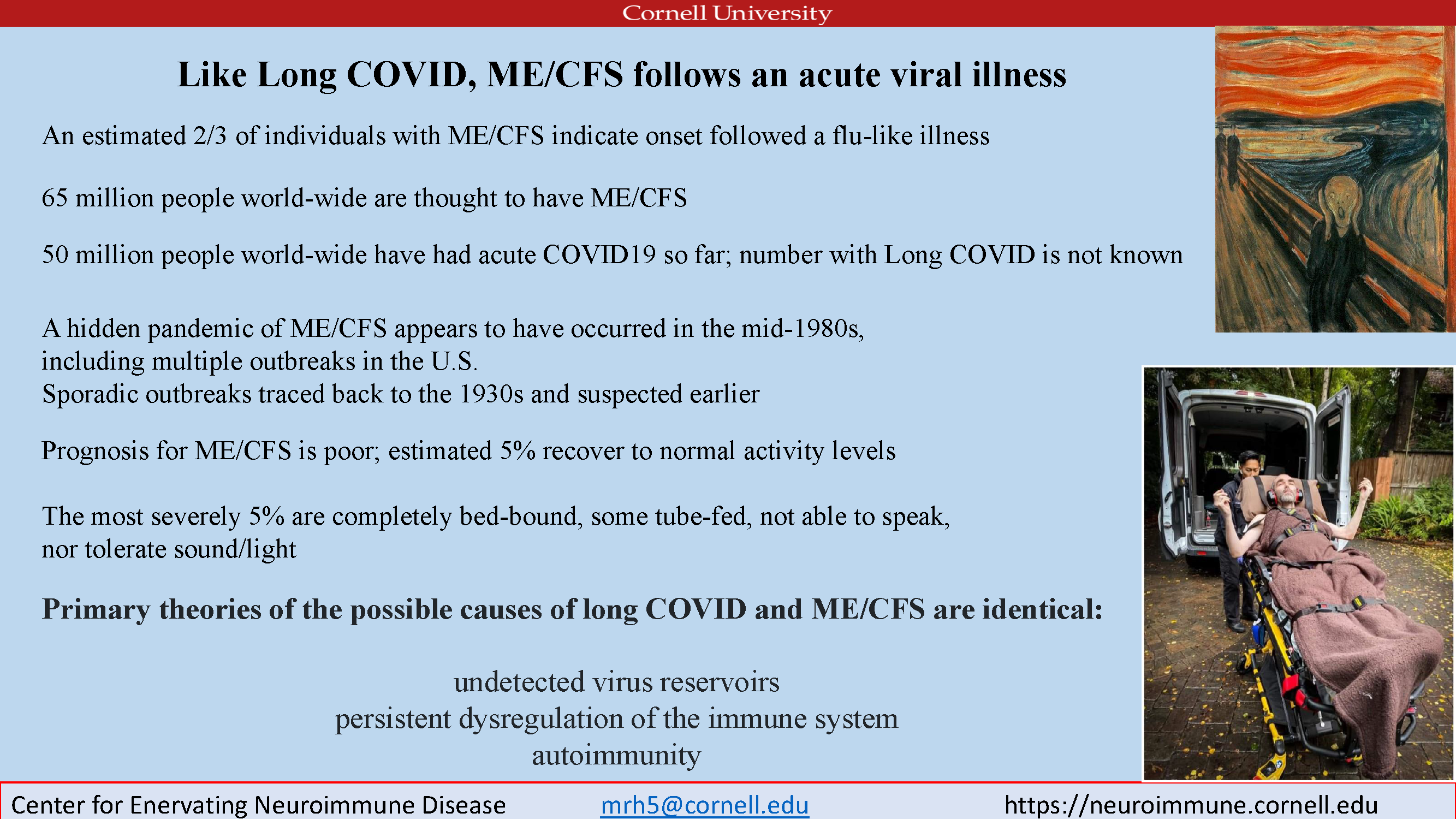
On November 4-5, 2020, Cornell University and Weill Cornell Medicine held a COVID-19 Summit to exchange information about research into the disease ongoing at both institutions. Dr. Maureen Hanson presented a “flash” talk with three slides to introduce Cornell COVID-19 researchers to the similarity between long-haul COVID-19 and ME/CFS. Content from Hanson’s talk is below.

Betsy Keller presents at Swedish RME annual ME/CFS conference 2020

At the Swedish RME annual ME/CFS conference on Oct. 14, 2020, Clinical Core Co-Director, Dr. Betsy Keller, presented virtually on post-exertional malaise (PEM). Keller goes into detail on PEM by covering what it is, ways to assess impairment due to PEM, and strategies to minimize PEM. Her full talk “PEM: Strategies for determining and managing the cardinal symptom of ME/CFS” can be viewed below and is also available on YouTube here.

For an English version of Swedish RME’s website visit this link.

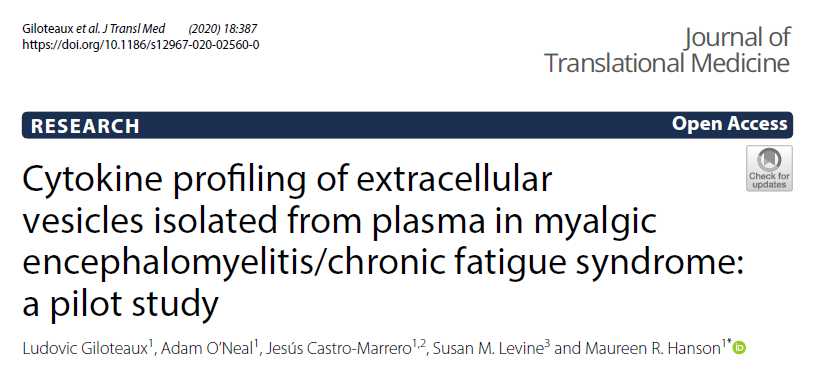
Our first EV publication finds disturbances in cytokine networks

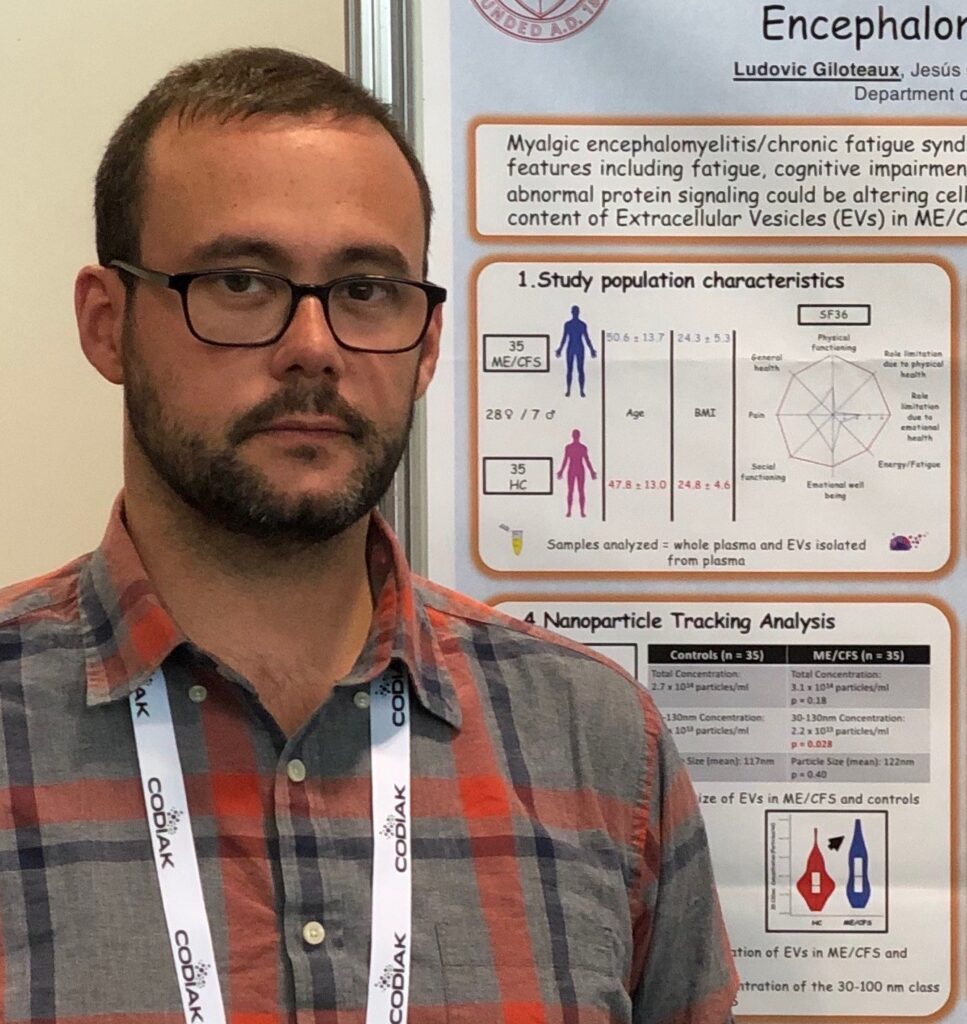
Dr. Ludovic Giloteaux

Center investigator Dr. Ludovic Giloteaux is lead author of a new publication out in the Journal of Translational Medicine. The paper describes cytokine profiling in extracellular vesicles (EVs) in ME/CFS. The study specifically looks at EVs from the plasma of 70 participants, 35 of which are diagnosed with ME/CFS and compared with 35 healthy controls. Both female and male participants were included in this work.  Dr. Jesus Castro-Marrero visited our lab from Spain on a fellowship to contribute to the project.

One key finding of the study is the noted disturbances in cytokine networks.. Disturbances in these cytokine networks were seen in both plasma and EVs, and provides further evidence of immune dysregulation in ME/CFS. We are using information from this work to inform our further studies on EVs from blood collected before and after an exercise challenge. Stay tuned for future publications from our Center on this topic.

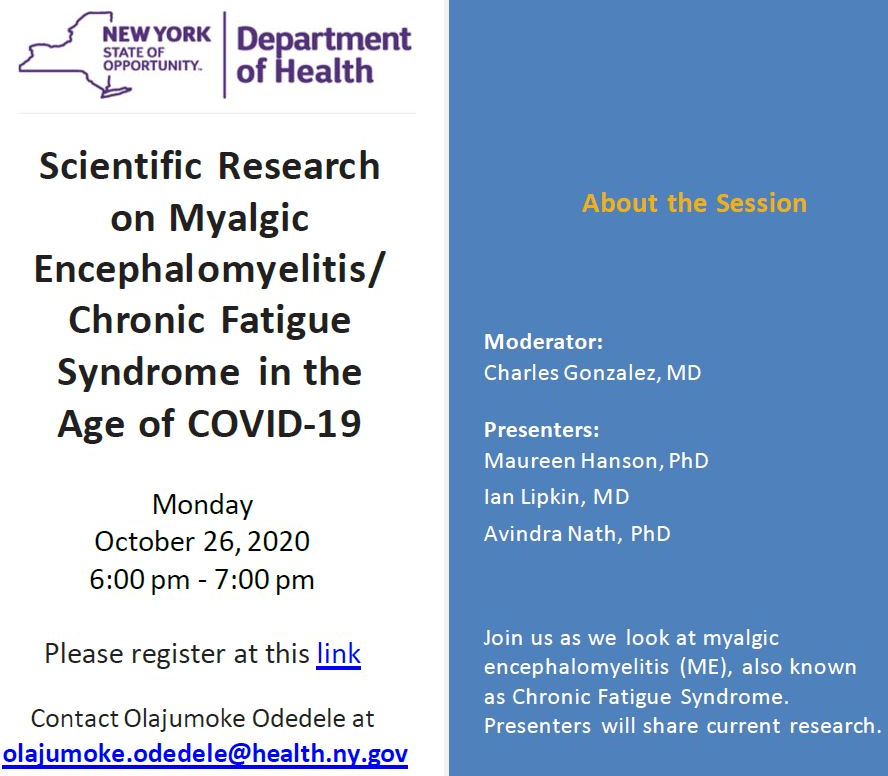
NYSDOH Panel Session on ME/CFS in Age of COVID-19

Center Director Dr. Maureen Hanson will be presenting current scientific research on ME/CFS during a panel session hosted by New York State Department of Health (NYS DOH). The session titled “Scientific Research on Myalgic Encephalomyelitis/Chronic Fatigue Syndrome in the Age of COVID-19” will be moderated by Dr. Charles Gonzalez. Dr. Ian Lipkin (Columbia University) and Dr. Avindra Nath (NIH) will be joining Hanson as panel presenters.

UPDATE: In case you missed the panel discussion, NYS DOH released a recording along with each presenter’s slides. Direct links to the recording and Dr. Hanson’s slides are below. Visit the NYS DOH ME/CFS website for more information.

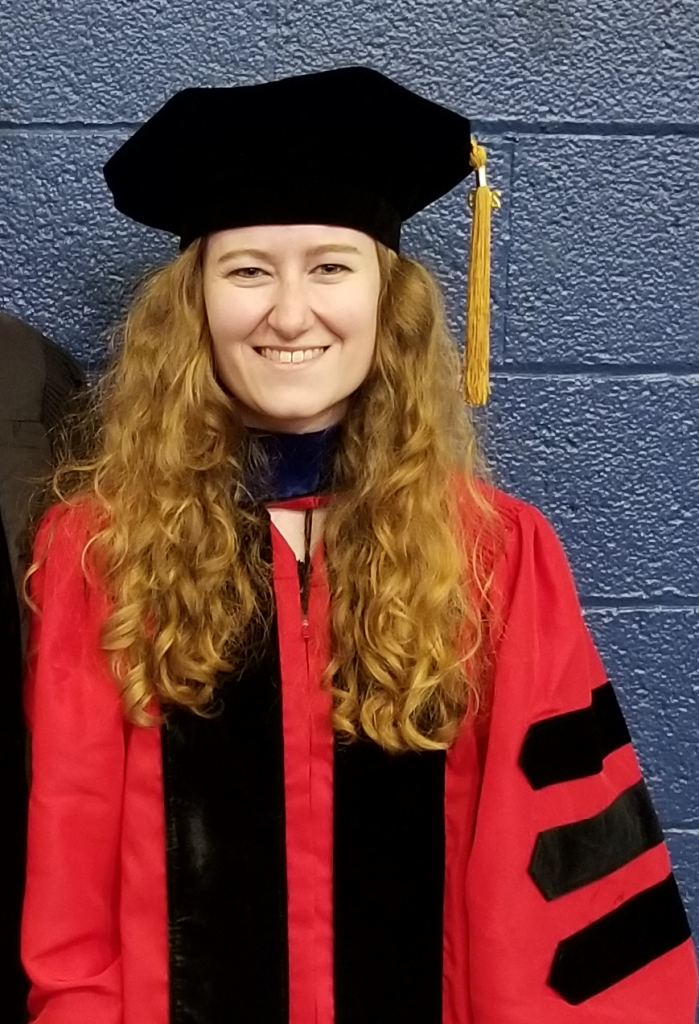
Alexandra Mandarano wins LPS award for JCI publication

Dr. Alexandra Mandarano

Hanson Lab alumna, Alexandra Mandarano ’19 Ph.D., received the Laboratory Product Sales (LPS) award for her December 2019 JCI publication. The LPS award is granted to a student of the graduate field Genomics, Genomics and Development who is first author on what is judged to be the “best” student paper published in a calendar year. The award includes Mandarano’s name engraved on a plaque in the Department of Molecular Biology and Genetics office. Congratulations, Dr. Mandarano!

Posts navigation

1 2 3 4 5 6 7 8
Scroll to top